Trick-taking games are one of the central traditions in card play. They reward planning, timing, and attention, but the basic structure is easy to understand once you have played a few hands. That balance is part of why the category has lasted so well.
Most popular right now
Ranked by unique visitors over the last 90 days, updated nightly.
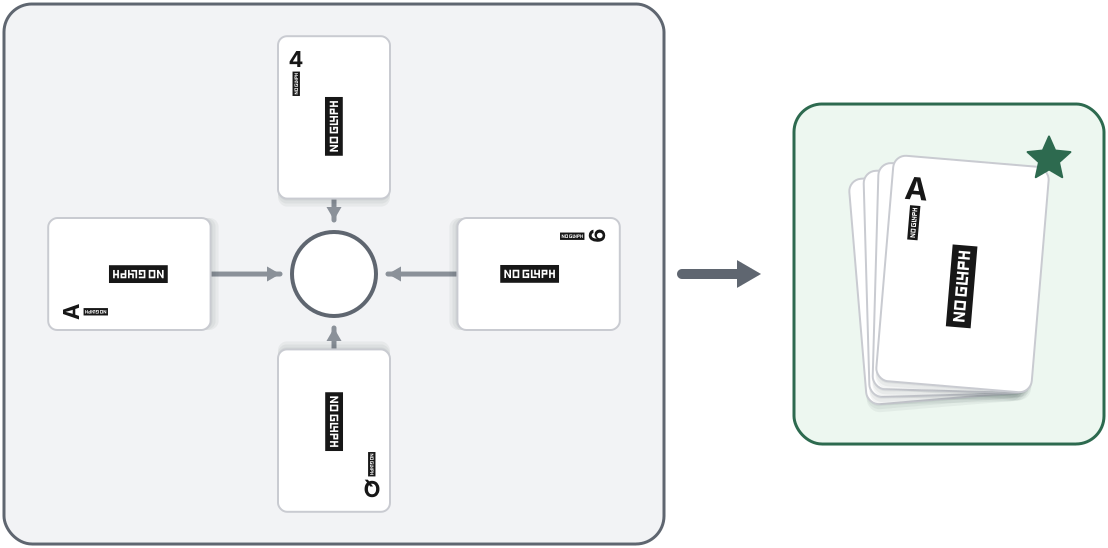
What Makes a Game "Trick-Taking"?
In a trick-taking game, play proceeds in a series of rounds called "tricks." Each trick begins when one player leads by playing a card face up. The remaining players then each play one card in turn, usually following the suit of the lead card if they can. Once everyone has played, the highest card of the led suit wins the trick, unless a trump card has been played, in which case the highest trump wins instead. The winner of each trick typically leads the next one.
This simple framework supports a wide range of games. Some trick-taking games reward you for winning as many tricks as possible, while others penalize you for taking certain cards. Some involve bidding on how many tricks you expect to win, adding a layer of prediction. The result is a family of games that ranges from light and casual to more demanding and strategic.
A Brief History
Trick-taking games developed in Europe over several centuries and gradually spread into many regional traditions. As the standard deck became more common, so did local trick-taking variants with different trump rules, scoring systems, and partnerships.
In the Nordic countries, trick-taking games have a particularly strong tradition. Games like Nomination Whist (known locally as Bondebridge) became staples of social gatherings. The Scandinavian game Cucumber added a unique twist to the formula, while Germany contributed Skat, which remains one of the most respected games in the genre.
Popular Trick-Taking Games
Hearts is one of the best-known trick-taking games in the English-speaking world. The goal is to avoid collecting hearts and especially the queen of spades. With no bidding phase and straightforward rules, Hearts is an easy introduction to the genre. Even so, there is still plenty to think about: which cards to pass, when to lose control of a trick, and whether to try "shooting the moon."
Nomination Whist takes the concept further by adding a bidding phase. Before play begins, each player predicts exactly how many tricks they will win. The challenge is that the total bids cannot equal the number of tricks available, guaranteeing that at least one player will miss their target. That creates a natural balance between ambition and caution.
Tribello is a distinctive three-player game that changes its rules with each round. One round might reward winning tricks, while the next penalizes them. This variation tests your ability to adapt from hand to hand. It is a strong choice when you have exactly three players and want a more tactical game.
Cucumber is a well-known Nordic classic that strips trick-taking down to its essentials. On each trick, you must either play a card equal to or higher than the current highest card, or play your lowest card. The catch is that whoever plays the highest card in the final trick of a round receives penalty points equal to that card's value. That creates steady tension as players try to shed their high cards early while forcing opponents to hold onto theirs.
Skat is Germany's national card game and one of the most strategically rich trick-taking games ever devised. Played with a 32-card deck by three players, Skat features a complex bidding system where the highest bidder becomes the "declarer" and plays alone against the other two. The declarer chooses the trump suit and must win at least 61 of the 120 points available in the deal. With its scoring, card counting, and positional play, Skat rewards dedicated study and practice.
Strategy Tips for Trick-Taking Games
Regardless of which trick-taking game you play, certain principles apply broadly. First, pay attention to which cards have been played. Counting cards, or at least tracking which high cards remain, gives you a significant advantage. Second, think about timing: knowing when to play your strongest cards and when to hold back is often the difference between winning and losing.
In games with bidding, like Nomination Whist and Skat, accurate self-assessment is crucial. Overbidding leads to penalties, while underbidding means missed scoring opportunities. Consider not just your own hand but what your opponents are likely holding. In partnership games like Euchre and Belote, communication through card play is an art form that develops over time.
Finally, do not underestimate the social element. Reading your opponents' habits and tendencies can matter almost as much as technical card skill.
Why Play Trick-Taking Games?
Trick-taking games occupy a practical middle ground in the card game world. They are complex enough to reward skill and study, yet structured enough that a single round rarely takes more than a few minutes. They scale well from quiet two-player sessions with Piquet to lively group affairs with Hearts or Pentathlon. And because they rely on a standard deck of cards, you can play them anywhere without needing to buy a specialized game.
If you want a card game that rewards repeated play without being hard to set up, trick-taking games are a good place to look. If you prefer games where each play must beat the last, see climbing card games, which share some of the same tension in a different format.